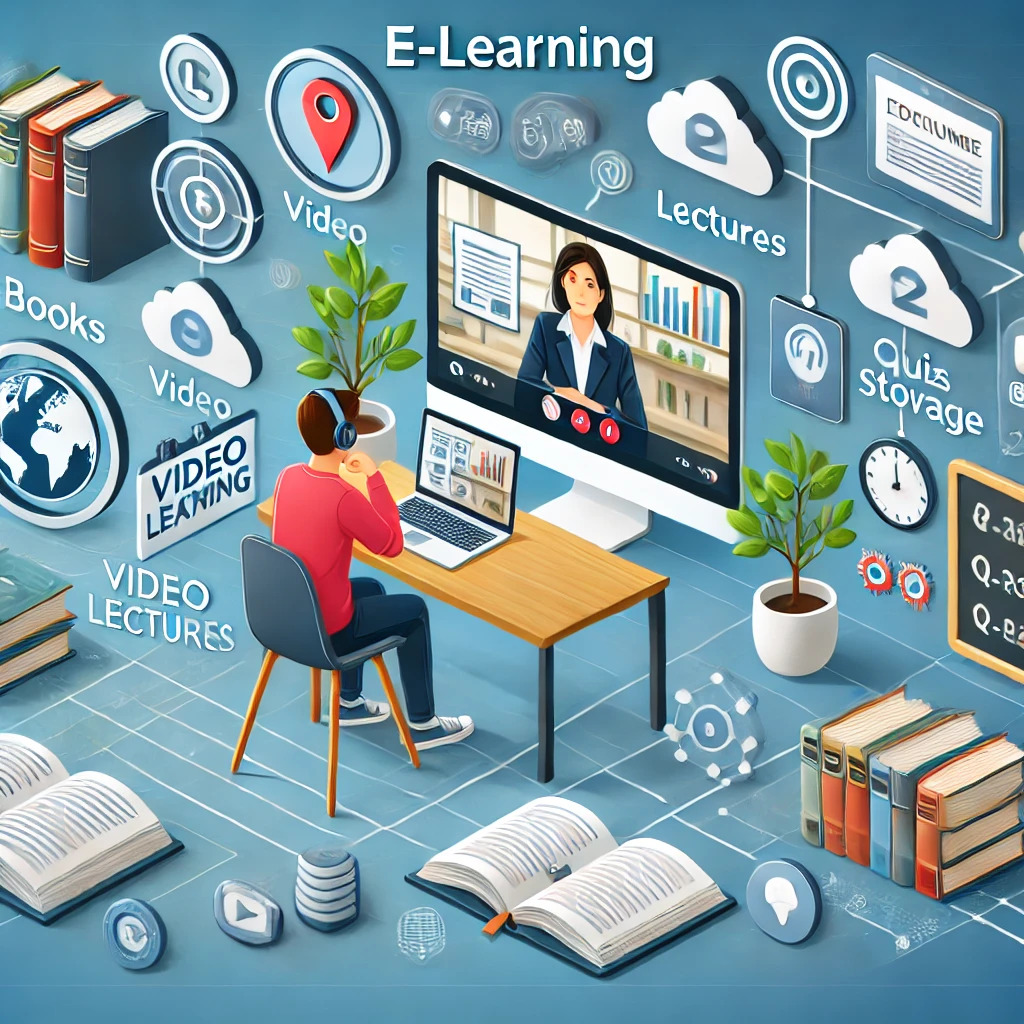
E-learning, or electronic learning, refers to the use of digital technologies to access educational curriculum and training outside of a traditional classroom. It can take place on computers, tablets, or smartphones and usually involves the internet, though it can also be delivered via offline software or CD/DVDs.
Key Features of E-Learning:
- Digital Content Delivery – Text, video, audio, presentations, and animations are used for instruction.
- Flexibility – Learners can access material anytime, anywhere.
- Interactivity – Quizzes, discussion forums, and simulations enhance engagement.
- Self-Paced or Instructor-Led – Learners may proceed at their own pace or follow a schedule with a virtual instructor.
- Assessment & Feedback – Includes online tests, assignments, and instant feedback.
Types of E-Learning:
- Synchronous – Real-time learning (e.g., live online classes, webinars).
- Asynchronous – Learners access content at their own convenience (e.g., recorded lectures, online modules).
- Blended Learning – Combines traditional classroom methods with online learning.
Advantages:
- Cost-effective and time-saving
- Scalable and consistent
- Accessible for remote learners
- Trackable progress through Learning Management Systems (LMS)
Common Platforms:
- Moodle, Google Classroom, Coursera, edX, Udemy, Khan Academy, etc.